-
×
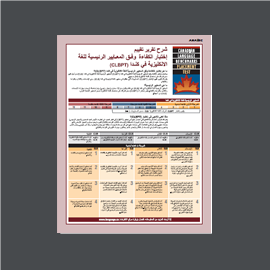
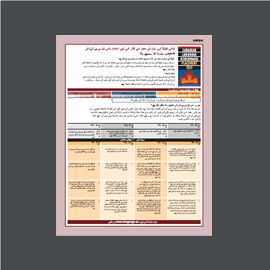
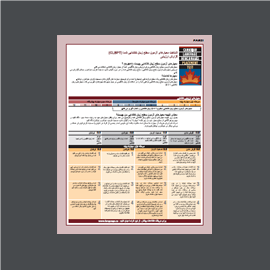 PDF-E-074 | Understanding your Canadian Language Benchmarks Placement Test (CLBPT) Assessment Report: Farsi Price : $0.00 Quantity : 1
Cart Subtotal : $0.00

Cart Subtotal : $0.00
CCLB offers exemplars and other resources relevant to CLBPT assessors on the testing.language.ca training platform under CLBPT resources and continuing education for assessors.
Description: The CLBPT is a pan-Canadian assessment instrument based on the national framework of the Canadian Language Benchmarks (CLB). The CLBPT measures the four language skills, namely listening, speaking, reading and writing, according to CLB levels 1 to 8.
Usage: The CLBPT is designed to effectively determine the language proficiency level of newcomers, immigrants or any adult learner who wishes to enroll in a EAL/ESL program. The CLBPT allows organizations to better determine the language needs of their learners and to suggest the program that best suits their needs.
This test is low stakes and cannot be used for employment, academic, immigration or citizenship purposes.
a) Entry to Canadian EAL/ESL programs / bridging programs / workplace language training programs that are not mandated to use a different CLB-based test by their funders.
b) Entry to workplace preparation program or other similar Canadian programs that include a language training component.
c) Entry to Canadian post-secondary programs that have a determined CLB level.
d) Verification of language levels prior to taking a recognized high stakes test in Canada.
a) Must be 16 years of age or older.
b) Must be an English as an additional or second language speaker.
c) Must intend to use the CLBPT results for one of the above approved purposes.
Note: Verification during intake must be conducted to ensure that the Client is eligible to take the CLBPT prior to scheduling the assessment. A Client must meet all three criteria to be eligible to take the CLBPT.
Online CLBPT Remote assessment provides a viable alternative to face-to-face administrations for regions without an assessment centre as well as remote locations. Online Remote assessment has resulted in clients who live in areas without an assessment centre having the opportunity to access assessment and placement into a language program much quicker than if they had to wait for an itinerant assessment.
The assessment is suitable for clients with at least basic computer skills. The client must know how to copy-paste information and log into a website and register. The Reading test requires use of a mouse to click the correct answers. The written test requires keyboarding skills. The Listening-Speaking assessment requires basic computer skills such as connecting with the assessor through Zoom and adjusting their computer volume as needed.
How to get access: Assessment site administrators/managers can email support@language.ca to request access to the training and related administration files for their assessors. A CCLB staff person will provide each assessor with a personalized assessor account on the platform (testing.language.ca). Once logged in, the assessor will have access to the training as well as all the administration files they will require to conduct Online Remote assessments with clients. The training is estimated to take around 45 minutes to complete.
Costs: Each assessor must have their own account on the testing platform. The fee is included in the annual site licensing renewal fee and provides each assessor with:
If your organization would like to offer CLBPT assessment for approved purposes, please contact training@language.ca.
If your site no longer conducts CLBPT assessments, you have to inform the CCLB immediately in writing to training@language.ca. Once the CLBPT License Termination has been made official, you/your site will be responsible to ensure that all CLBPT Kits or lose CLBPT materials are destroyed in a secure manner (i.e.: shredding). However, you will be expected to keep the test results of your clients on site for a period of at least 2 years after they were conducted (see section 4.6 of the CLBPT licensing agreement).
Description: The 2018 CLB-LPT is an assessment that measures the reading and writing abilities of literacy learners in reference to levels described in the Canadian Language Benchmarks: ESL for Adult Literacy Learners (ALL) document. The results obtained with this tool provide information about the learner’s literacy skills in English.
Usage: CLB-LPT assessment results are to be used for the purpose of placing ESL literacy clients into appropriate programs and classes.
This test is low stakes and cannot be used for employment, academic, immigration or citizenship purposes.
Type of clientele: Adult newcomers (18 years and older) to Canada who wish to take government funded LINC or ESL courses and have shown literacy needs during their speaking and listening test (CLBPT).
Description: The BTC-NCLC is a pan-Canadian assessment instrument based on the Niveaux de compétence linguistique canadiens (NCLC), français langue seconde (FLS) pour adultes. The BTC-NCLC measures the four language skills, namely listening, speaking, reading and writing, according to NCLC levels 1 to 8.
Usage: The BTC-NCLC is designed to effectively determine the language proficiency level of newcomers, immigrants or any adult learner who wishes to enroll in a CLIC or FSL program. It allows Francophone organizations and CLIC or FSL programs to better determine the language needs of their learners and to suggest the program that best suits their needs.
This test is low stakes and cannot be used for employment, academic, immigration or citizenship purposes.
Type of clientele: Adult newcomers (18 years and older) to Canada who wish to take government funded CLIC or FSL courses.
If your organization would like to offer BTC-NCLC assessments, please contact training@language.ca.
If your site no longer conducts BTC-NCLC assessments, you have to inform the CCLB immediately in writing to training@language.ca. Once the BTC-NCLC License Termination has been made official, you/your site will be responsible to ensure that all BTC-NCLC materials are destroyed in a secure manner (i.e.: shredding). However, you will be expected to keep the test results of your clients on site for a period of at least 2 years after they were conducted (see section 4.6 of the BTC-NCLC licensing agreement).
Description: The 2018 BTC-AMA is an assessment that measures the reading and writing abilities of literacy learners in reference to levels described in the Niveaux de compétence linguistique canadiens : Français langue seconde pour adultes moins alphabétisés (FLS pour AMA) document. The results obtained with this tool provide information about the learner’s literacy skills in French.
Usage: BTC-AMA assessment results are to be used for the purpose of placing FSL literacy clients into appropriate programs and classes.
This test is low stakes and cannot be used for employment, academic, immigration or citizenship purposes.
Type of clientele: Adult newcomers (18 years and older) to Canada who wish to take government funded CLIC or FSL courses and have shown literacy needs during their speaking and listening test (BTC-NCLC).
Description: The Workplace Language Assessment (WLA) is a Canadian Language Benchmark (CLB) assessment that measures listening, speaking, reading and writing skills from CLB 6 to CLB 10.
Usage: The WLA is designed to place ESL clients in higher-level language training programs that focus on preparing newcomers for the Canadian workforce or in bridge to employment programs. The WLA is a streamlined assessment that allows candidates to demonstrate their readiness for programs involving further language and work-related training. The WLA is an effective, reliable tool for measuring the language proficiency of internationally educated professionals.
The WLA should not be used for assessment at the end of a training program. It should also not be used to assess language for direct entry into the workplace, nor for assessing professionals seeking access into licensed professions.
Type of clientele: The WLA is designed for internationally educated professionals with work experience who are seeking employment in their field. They should have had English language training and exposure to English usage and have achieved an intermediate to advanced level of proficiency.
This test is available in English only.
Description: CLB 5-10 Exit Assessment Tasks allow facilitators to assess the language achievements of adult learners at any point during their ESL training program. The tasks support teachers in documenting and reporting on the proficiencies described in the Canadian Language Benchmarks – Stages 2 and 3.
Usage: This tool can be used to support or reassess decisions about learner achievement but should not be used as the sole source of information about learner proficiencies. It cannot replace performance demonstrations that result from ongoing, curriculum-based assessments. This tool should be used to support PBLA practices within the classroom, not replace them.
Type of clientele: CLB 5-10 Exit Assessment Tasks are designed for adult ESL learners and teachers in publicly funded ESL programs for immigrant learners (LINC and non-LINC), ESL bridging/integrated skills programs and other ESL upgrading and career transition programs.
This tool is available in English only.
Centres that offer this test: This tool is not available in assessment centres. If your organization would like to use it, you may register for the training and buy the tool by visiting: https://www.language.ca/c5003-clb-5-10-exit-assessment-tasks-f2f/. A version of the tool is also available for remote use. For more information, visit: https://www.language.ca/c5003-2-clb-5-10-exit-assessment-tasks-online-delivery/
Description: SAM is a tool for ESL teachers to assess the language achievements of adult students in ESL classrooms. It is based on the Canadian Language Benchmarks (CLB), Stage I. Its purpose is to help teachers document the attainment of basic levels of communicative proficiency in ESL programs. Teachers use SAM to measure their students’ CLB-related learning outcomes by selecting a specific theme unit for instruction and then use the related SAM tasks for assessing achievement.
Usage: SAM helps teachers provide meaningful CLB assessment of student achievement standards at any point during a period of instruction. This tool can be used to support or reassess decisions about learner achievement but should not be used as the sole source of information about learner proficiencies. It cannot replace performance demonstrations that result from ongoing, curriculum-based assessments such as PBLA.
Type of clientele: SAM is designed for adult ESL learners and teachers in publicly funded ESL programs for immigrant learners (LINC and non-LINC), ESL bridging/integrated skills programs, and other ESL upgrading and career transition programs.
This tool is available in English only.
Centres that offer this test: This tool is not available in assessment centres. If your organization would like to use it, please visit our webpage to purchase copies as needed: (insert link when available again)
Canadian Language Benchmarks Assessment (CLBA)
Description: The CLBA is a nationally recognized standard for assessing English as a Second Language proficiency in adults. The task-based assessment is aligned with the Canadian Language Benchmarks (CLB). It measures a person’s English language proficiency in four skill areas: listening, speaking, reading and writing. The assessment results are reported as benchmarks on a scale of 0 to 8.
Usage: The CLBA is used to determine a newcomer’s English language proficiency in listening, speaking, reading and writing at various stages of learning. The CLBA is an assessment tool rather than a traditional test. Its purpose is to help place language learners in instruction programs appropriate for their level of competence in English.
Type of clientele: Adult newcomers (18 years and older) to Canada who wish to take government funded LINC or ESL courses.
This tool is available in English only.
Centres that offer this test:
Assessment sites in Ontario: https://achev.ca/assessment-locations-in-ontario/.
Assessment sites in Canada: https://achev.ca/assessment-locations-in-canada/.
Canadian Language Benchmark Placement Assessment (CLBPA)
Description: The CLBPA is the new CLB-based English language assessment tool designed for guiding placement of immigrant learners into government-funded language programs. It was developed by Achēv in collaboration with CCLB and funded by IRCC. The CLBPA is designed to assess CLBs 1–8 in all four language skills. It is based on the revised CLBs (the latest standard). Some components of the assessment are completed by the client on a computer (although a complete paper-based version is available for specific needs).
Usage: The CLBPA is designed to effectively determine the language proficiency level of newcomers, immigrants or any adult learner who wishes to enroll in a LINC or ESL program. The CLBPA allows Anglophone organizations and LINC or ESL programs to better determine the language needs of their learners and to suggest the program that best suits their needs.
This test is low stakes and cannot be used for employment, academic, immigration or citizenship purposes.
Type of clientele: Adult newcomers (18 years and older) to Canada who wish to take government funded LINC or ESL courses.
This test is offered in English only, but an equivalent French version is available (BTC-NCLC).
Contact Achēv to find out where this test is offered: https://achev.ca/contact-us/
Canadian Language Benchmarks for Adult Literacy Learners (CLBA-LL)
Description: The CLBA-LL published in 2016 introduced a new scale for the measurement of literacy skills. The scale aligns literacy benchmarks with ESL benchmarks so clients can be placed accurately and served appropriately in the classes that are available to them.
Usage: The CLBA-LL is used in conjunction with the CLBA. It measures an English as a Second Language learner’s degree of literacy in the learner’s first language (27 languages available). The assessment tool is used to place clients in literacy classes.
Type of clientele: Adult newcomers (18 years and older) to Canada who wish to take government funded LINC or ESL courses and have shown literacy needs during their speaking and listening test (CLBA).
This test is available in English only.
Centres that offer this test:
Assessment sites in Ontario: https://achev.ca/assessment-locations-in-ontario/.
Assessment sites in Canada: https://achev.ca/assessment-locations-in-canada/.
Enhanced Language Training Placement Assessment (ELTPA)
Description: The ELTPA is a low-stakes assessment tool for placing adult immigrants, mostly internationally trained professionals and tradespeople, in Enhanced Language Training programs. The ELTPA consists of two assessment tools: ELTPA (6–10) and ELTPA (9–10). The assessment tools, referenced to the Canadian Language Benchmarks (CLB), focus on evaluating language skills (speaking, listening, reading and writing) related to work or work-readiness.
Usage: The ELTPA can be used for placing clients into higher level ESL classes, Occupation-Specific Language Training, Enhanced Language Training and Bridging programs. It is also sometimes used to determine whether a client has a sufficiently advanced level of English for college programs or the workplace.
Type of clientele: This English language assessment tool is designed for permanent residents, Canadian citizens and refugee claimants who have already taken a previous CLB assessment and scored benchmarks of 6+.
This test is available in English only.
Centres that offer this test:
Assessment sites in Ontario: https://achev.ca/assessment-locations-in-ontario/.
Assessment sites in Canada: https://achev.ca/assessment-locations-in-canada/.
Canadian Language Benchmark Online Self-Assessment (CLB-OSA)
Description: Development of the CLB-OSA was guided by a set of principles that served to define specific objectives and appropriate uses for the tool and identify groups of users. The tool measures receptive skills (listening and reading). Once the assessment is completed, a benchmark range instead of a specific score is displayed on the screen. For example, a client could obtain a benchmark range of 2–3, 5–6 or 7–8.
Usage: CLB-OSA results are unofficial and cannot be used for employment, academic, immigration or citizenship purposes. They are intended to give users an approximate idea of their language ability in English. These results can inform planning and decision making related to language training, settlement and career-related goals.
Type of clientele: Intended users of the self-assessment tool:
This test is offered in English only, but an equivalent French version is available (NCLC-AEL).
Centres that offer this test: This is an online self-assessment, it is not offered in assessment centres, but clients can access it using any electronic device with an internet connection: https://www.clb-osa.ca/
Niveaux de compétence linguistique canadiens autoévaluation en ligne (NCLC-AEL)
Description: Development of the NCLC-AEL was guided by a set of principles that served to define specific objectives and appropriate uses for the tool and identify groups of users. The tool measures receptive skills (listening and reading). Once the assessment is completed, a benchmark range instead of a specific score is displayed on the screen. For example, a client could obtain a benchmark range of 2–3, 5–6 or 7–8.
Usage: NCLC-AEL results are unofficial and cannot be used for employment, academic, immigration or citizenship purposes. They are intended to give users an approximate indication of their language ability in French. These results can inform planning and decision making related to language training, settlement and career-related goals.
Type of clientele: Intended users of the self-assessment tool:
This test is offered in French only, but an equivalent English version is available (NCLC-AEL).
Centres that offer this test: This is an online self-assessment, it is not offered in assessment centres, but clients can access it using any electronic device with an internet connection: https://www.nclc-ael.ca/.
Here are some online resources that you can easily share with your clients depending on their needs.
Client/Learner Resources: https://www.language.ca/resourcesexpertise/for-language-learners/
Understanding Canadian Language Benchmark:
Language Training Options for Newcomers to Canada:
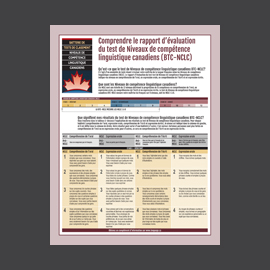
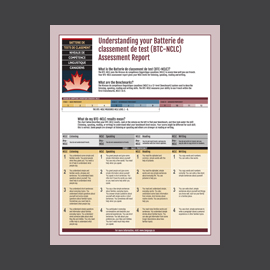
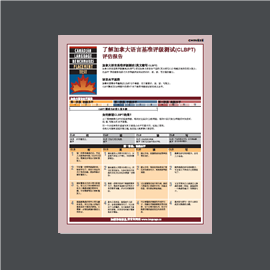
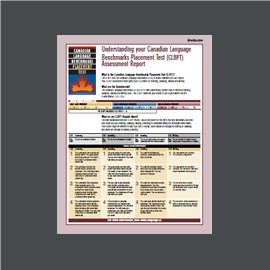
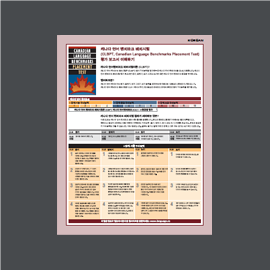
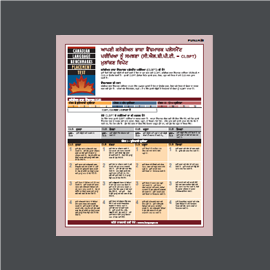
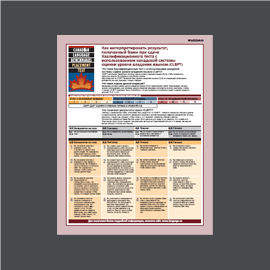
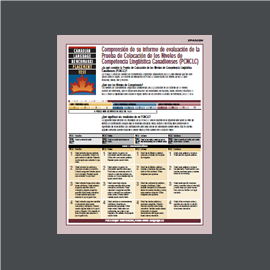
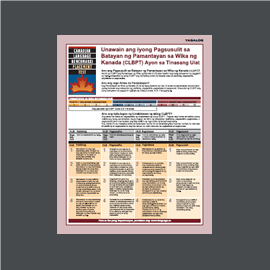
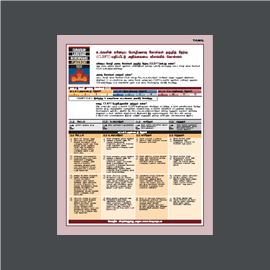
While the majority of the reports are specific to the CLBPT test, the content is also applicable to the BTC-NCLC test and can be provided to clients who wish to better understand what their assessment level means in their own language (10 of the most common languages in Ontario (other than English and French) were selected by the funder at the time of developing these documents).
CCLB has also prepared an English and French version of the “Understanding your Canadian Language Benchmarks Placement Test (CLBPT) Assessment Report” specifically for the BTC-NCLC. The content of these documents is essentially the same, as the CLB and NCLC levels do not differ much, but the term CLBPT has been replaced by BTC-NCLC, and the term CLB has been replaced by NCLC. These are the first two documents in the list below.

Below are some videos that give clients more information about their assessment and free language training in Canada. You can share the videos with your clients in the language they prefer. You can play them directly from our website, or you can add the videos to your own website for easy client access.
Link: https://vimeo.com/690543933
Embed code:
<iframe src=”https://player.vimeo.com/video/690543933?h=eeaec56d8c” width=”640″ height=”360″ frameborder=”0″ allow=”autoplay; fullscreen; picture-in-picture” allowfullscreen></iframe>
Link: https://vimeo.com/690543479
Embed code:
<iframe src=”https://player.vimeo.com/video/690543479?h=d160f6419a” width=”640″ height=”360″ frameborder=”0″ allow=”autoplay; fullscreen; picture-in-picture” allowfullscreen></iframe>